

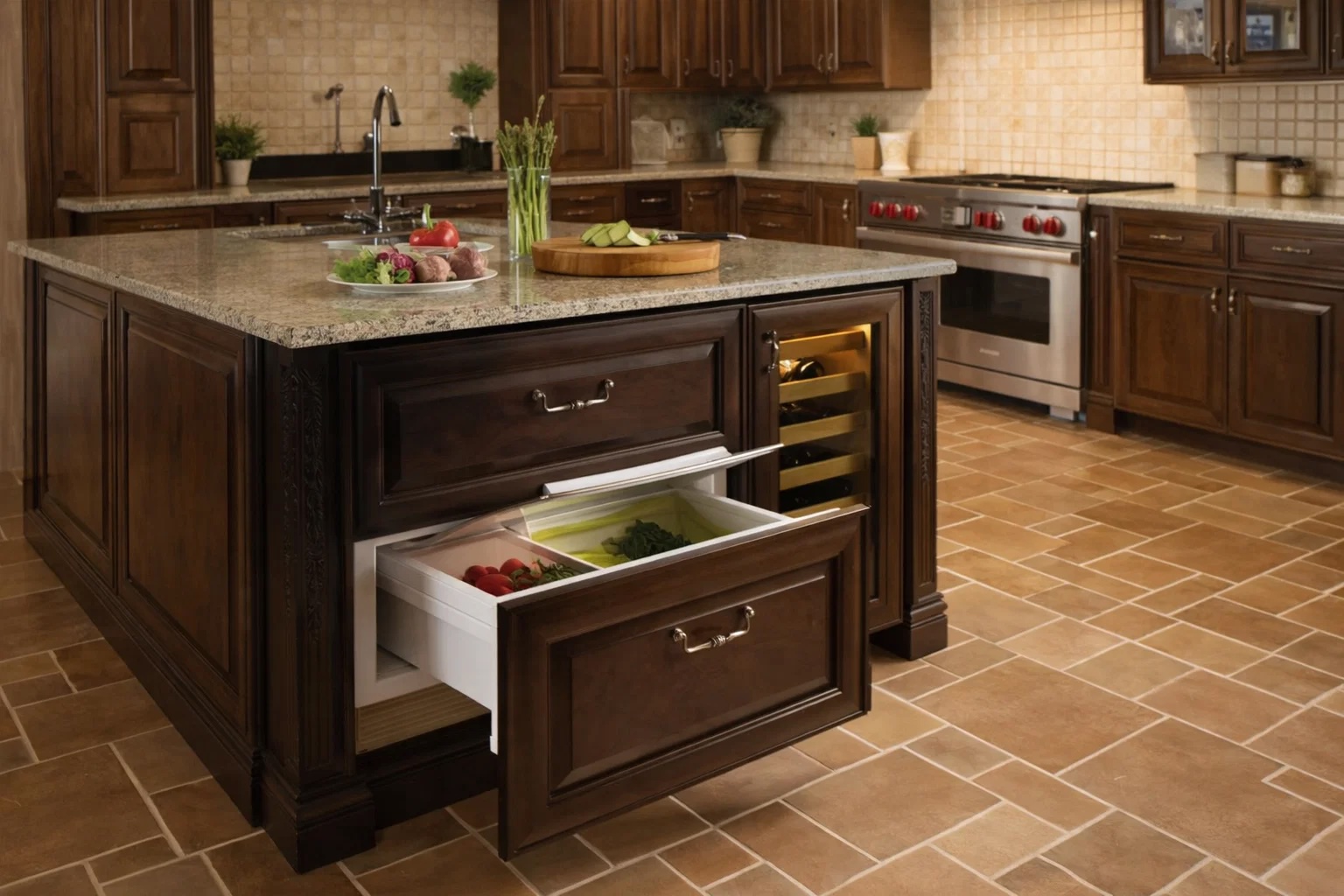
You know, one thing never changes: a properly working Sub-Zero drawer is practically silent. The rails are engineered to millimeter precision, the soft-close dampers are tuned for buttery-smooth operation, and even fully loaded crispers glide open with little more than a whisper. That’s the standard Sub-Zero owners expect – and usually get – for years.
Yet every week we at Sub-Zero Techs still get calls that start the same way: “My drawer fridge making noise all of a sudden.” Sometimes it’s a faint squeak that only happens at 3/4 extension. Sometimes it’s an obvious grinding or clicking that echoes through the kitchen. The good news? Most of these noises have straightforward explanations and fixes. The bad news? A few of them are early warning signs of damage that can get expensive fast if ignored.
In this guide our Atlanta technicians break down exactly what’s normal, what isn’t, and – most importantly – where the line is between a quick homeowner fix and the moment you should pick up the phone for reliable help. We’ll cover the tell-tale sounds, the models we see them on most often, and the safe steps you can take tonight to quiet things down before a small annoyance turns into a big repair bill. This is a routine visit for our team – you can book it through our coverage in Suwanee.
Normal vs. Abnormal Drawer Sounds

After thousands of service calls across Atlanta and north Georgia, our technicians can diagnose a Sub-Zero drawer issue in the first ten seconds of a customer’s description. The sounds are predictable once you know the pattern.
Here’s the simple breakdown we give every homeowner:
Normal sounds you can safely ignore
- Soft “shhh” or light glide hush when opening or closing – that’s the precision rails doing their job.
- Gentle click or magnetic “thump” as the drawer seals itself – normal soft-close function.
- Very faint humming from the compressor that’s consistent front-to-back – typical of any refrigerator.
- Occasional single click when the drawer reaches full extension or closure – damper engaging.
Abnormal sounds that should make you stop and listen closer
- Drawer squeaking noise or high-pitched refrigerator drawer squeaking that gets louder the slower you pull – almost always dry or misaligned glide rails.
- Drawer grinding sound or gritty scraping feeling under your hand – metal-on-metal contact, usually from worn nylon rollers or bent tracks.
- Persistent rattling or loose vibration when the drawer is closed – often a rail mounting screw working itself free or accumulated drawer ice debris bouncing around.
- Drawer mechanical noise that sounds like plastic clicking repeatedly at the same spot in the travel – damaged gear teeth in the soft-close mechanism.
- Undercounter squeaking sound or other kind of undercounter noise that only happens when the drawer is half-open – classic symptom of ice buildup or debris jammed in the lower slide.
- Any new drawer fridge vibration problem that travels through the cabinet or floor – usually a sign the drawer is no longer sitting level on both rails and is starting to stress the frame.
Left alone, these noises rarely stay “just noises.” We’ve seen simple drawer ice debris turn into cracked $400 slide assemblies and ignored drawer squeaking noise lead to complete soft-close cartridge replacement because the gears eventually strip.
Model-Specific Drawer Noise Patterns Our Technicians See Most Often
Over the years, certain Sub-Zero series show up in our Atlanta shop with almost identical drawer complaints. Below is the real-world cheat sheet our techs use every day: the models we see most, the exact noise owners describe, the usual culprit, and what happens if you keep pulling on a drawer that’s already screaming for help.
Model | Typical Noise Symptoms | Most Common Cause | What Happens If Ignored |
ID-30CI | ID-30CI drawer noise issue, high-pitched squeak at mid-travel, occasional drawer grinding sound | Dry or failing nylon rollers, drawer ice debris in lower track | Rollers shatter → full drawer slide problems |
ID-30C / ID-30R / ID-30FI | ID-30 drawer mechanism noise, repetitive clicking, light rattling when closed | Soft-close damper cartridge wearing out or loose mounting screws | Damper fails completely → drawer slams, can crack crisper front |
ID-36 | Loud squeak on full extension, metal-on-metal scrape | ID-36 drawer slide problems, bent intermediate rail from overloading | Rail bends permanently → drawer tilts and won’t close flush |
ID-27R | ID-27 drawer squeaking only on slow open, gets worse in summer | Lack of lubrication + humidity swelling wood overlays | Squeak turns into grinding → premature glide replacement |
ID-24R / ID-24FI / ID-24RO | ID-24 drawer noise, high-pitched whine + vibration | Ice buildup under drawer (common in high-humidity GA homes) | Ice eventually chips glide coating → drawer slide problems |
700TR | 700TR drawer rattling + clicking at ¾ open | Loose upper rail screws, worn plastic spacers | Screws fall out → drawer drops on one side, possible frame damage |
700BC / 700BCI / 700BF / 700BR / 700TCI | Intermittent rattling inside drawer, faint grinding | Debris or broken roller fragments trapped in track | Fragments score the aluminum rail → full slide assembly replacement |
UC-24R / UC-24CI | Undercounter squeaking sound that echoes under cabinet | Lower glide collecting pet hair and dust (common in Atlanta kitchens) | Glide seizes → drawer sticks halfway, risks motor burnout on powered versions |
UC-15I / UC-15IP | Sharp drawer mechanical noise when soft-close engages | Ice maker drip freezing in slide channel | Ice block cracks plastic glide → expensive undercounter overhaul |
315W (wine storage) | Refrigerator drawer squeaking + vibration through rack | Heavy bottles shifting weight, rails out of level | Continuous vibration loosens rack screws → bottles can fall |
These patterns are so consistent that when a customer in Buckhead or Marietta tells us the model and the exact sound, we’re already pulling the right parts before the truck leaves the shop.
Seeing your model on this list with a matching noise? That’s the moment to act – not next month. One qualified visit now almost always keeps the repair under a few hundred dollars instead of four figures later.
How to Fix Drawer Noise – DIY Steps vs. When to Call a Experienced Tech
Most drawer noises start small, and catching them early usually means a five-minute fix instead of a five-figure one. Here’s exactly what our Atlanta techs tell owners to try first and where to stop.

Safe DIY steps that actually work (and won’t void your warranty)
- Unload the drawer completely, pull it all the way out until it stops, then lift and remove it (most Sub-Zero drawers lift straight off the slides).
- Vacuum or wipe out every bit of drawer ice debris, pet hair, or spilled crumbs from the tracks – this alone solves about 40% of the squeaks we see.
- Inspect for obvious ice buildup under the drawer or in the rear channel and gently melt it with a hairdryer on low (never use sharp tools).
- Check that both rails are level and the drawer sits evenly when reinstalled – a slight twist is enough to cause troubleshooting noise in drawer issues.
- Apply a tiny drop of food-grade silicone spray only to the metal ball-bearing carriages if the manual for your model allows it – this is the only approved drawer mechanism squeak fix for homeowners.
These steps are usually enough for how to quiet drawer refrigerator noises caused by simple buildup or minor misalignment.
Red flags – stop touching it and call us immediately
- You feel grinding or catching instead of smooth travel → worn or broken rollers that require repair drawer mechanism.
- The drawer tilts to one side or drops even slightly when extended → bent rail or failed bearing cage.
- Noise continues after cleaning and realignment → internal soft-close cartridge or gear damage.
- Any visible cracks in the plastic glides or metal tracks → needs experienced quieting drawer unit replacement before it gets worse.
Trying to force or over-lubricate at this point almost always turns a $300 repair into a $900 one.
Conclusion
A quiet Sub-Zero drawer isn’t a luxury – it’s the way the appliance was designed to run for decades. The moment yours starts squeaking, grinding, or rattling, you now know exactly what’s normal, what isn’t, and how far you can safely go on your own. In our experience across Atlanta, acting within the first week of hearing an unusual noise saves owners hundreds (sometimes thousands) compared to waiting.
FAQ
Why is my Sub-Zero refrigerator drawer squeaking only when I open it halfway?
That exact “halfway squeak” is almost always the intermediate rail or center roller hitting a piece of debris or starting to dry out. It only makes contact at that specific point in the travel, which is why the noise seems positional. Clean the tracks thoroughly first; if it returns within a week, the roller coating is wearing off.
Is drawer grinding sound ever normal in newer ID-30CI units?
Never. A new or recent ID-30CI should be virtually silent. Any grinding means metal-on-metal contact – usually a failed nylon roller or a bent slide that happened during delivery or installation. We see this more often than people expect on brand-new built-in installs.
How do I know if it’s just drawer ice debris or a broken glide?
Remove the drawer and look straight into the tracks with a flashlight. Small ice chunks or crumbs = debris (DIY fix). If you see white plastic shavings, cracked rollers, or shiny metal scratches on the aluminum rail, the glide is already breaking – stop pulling on it and call us.
Can drawer slide problems damage the soft-close system permanently?
Yes, 100%. When the main slides are worn or misaligned, the soft-close damper has to fight twice as hard on every cycle. We replace a lot of damper cartridges that failed early simply because the owner kept using a drawer with bad glides for six extra months.
My 700TCI has started rattling – can noisy drawer problems actually cause the drawer to stop cooling properly?
Indirectly, yes. Severe drawer slide problems or loose rails on 700BC / 700BCI / 700BF / 700BR / 700TCI may result in the unit not cooling as they let the drawer sit slightly open when “closed,” breaking the seal. On 700-series all-refrigerator drawers especially, that tiny gap can raise internal temperature 8-10 °F and strain the evaporator – owners suddenly notice warm spots or excess frost even though the compressor is running fine.
