

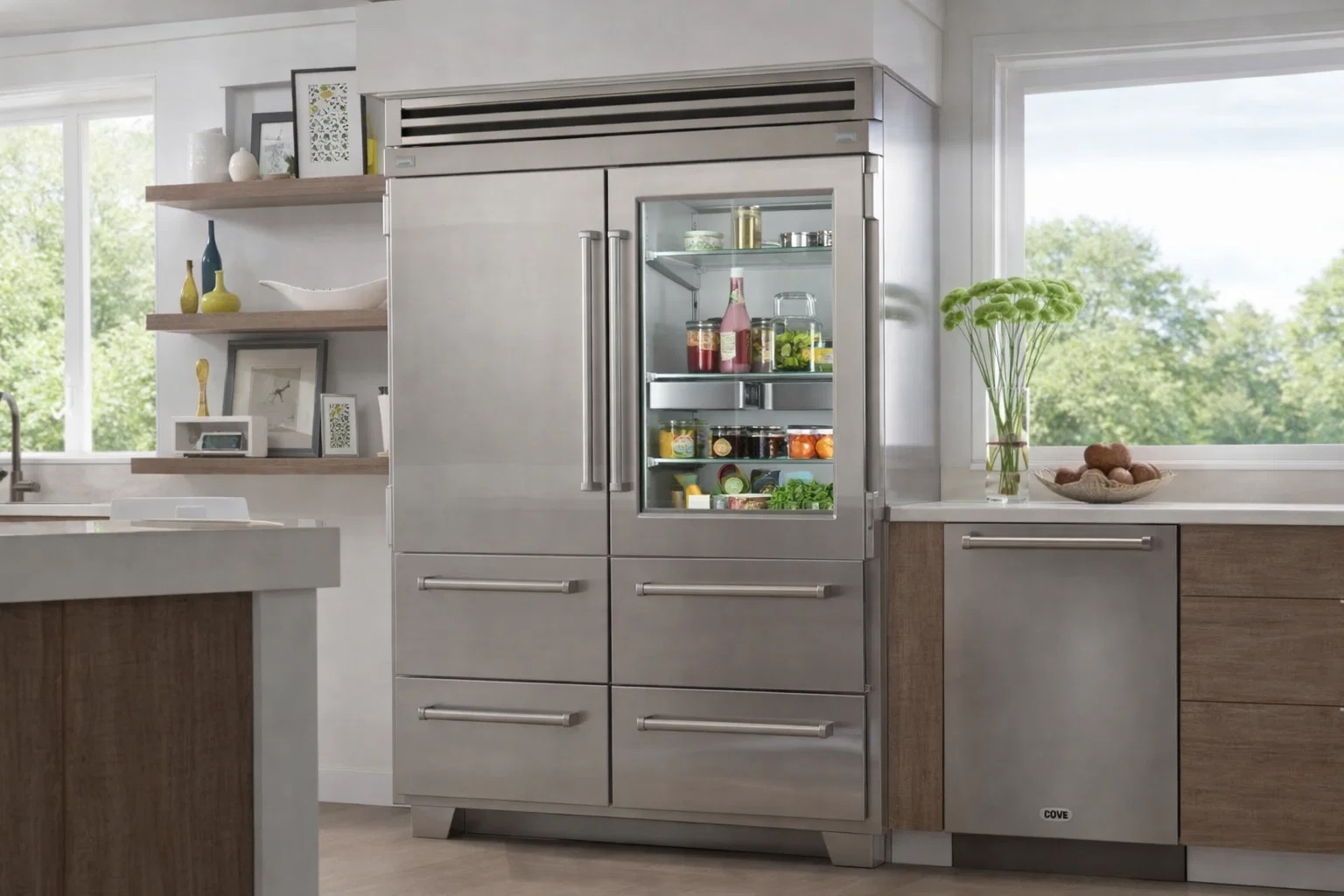
If you’re in the restaurant business or run a high-volume residential kitchen in Atlanta, you already know that a Sub-Zero Pro Series isn’t just another fridge — it’s the backbone of your operation. Built like commercial tanks but finished with residential elegance, the Pro Series (think PRO3650, PRO4850, 648PRO, and their glass-door or all-refrigerator variants) is designed for exactly the kind of punishment most home refrigerators would never survive: doors swinging open every thirty seconds, constant restocking during dinner rush, and still holding rock-steady temperatures whether it’s 95 °F outside or you’ve just loaded fifty pounds of produce.
These beasts are the only full-size refrigerators on the market with true commercial style construction — stainless-steel everything, magnetic crisper seals borrowed from walk-ins, and dual compressors that let the fridge and freezer run completely independently. The 648PRO (and its newer 648PROG sibling) has been a restaurant staple for decades, while the newer PRO3650 and PRO4850 series brought that same high-volume toughness into luxury homes and boutique commercial spaces without sacrificing the sleek look everyone expects from Sub-Zero.
Here’s what makes them special under the hood:
- Dual-compressor systems that isolate cooling circuits (no temperature swings when one side works harder).
- NASA-inspired air purification that scrubs ethylene and odors every 20 minutes.
- Microprocessor controls that adjust cooling effort based on how often the door opens — critical for PRO high-volume operation.
But even bulletproof gear can develop temperature hiccups, especially when it’s asked to perform at commercial intensity day after day. We’ve lost count of the Atlanta steakhouse walk-ins and private-chef kitchens that have called us because a PRO3650 commercial temperature crept up a few degrees during Friday night service, or a 648PRO suddenly couldn’t keep the bottom drawer under 38 °F after a holiday party.
The good news? Most temperature issues in the Pro Series are predictable, diagnosable, and — in many cases — fixable before you lose product. In this guide, our Atlanta Sub-Zero Techs team breaks down exactly what goes wrong with Pro Series temperature control, how to spot it early, and what to do about it (whether you grab a flashlight and a multimeter yourself or pick up the phone for us).
Key Features of Pro Temperature Management
The Sub-Zero Pro Series was built to meet commercial use demands — think busy restaurant lines, catering prep stations, or high-end homes that run like commercial kitchens. That commercial style DNA is exactly what separates it from every other high end refrigerator on the market.
Here’s what actually keeps these units rock-solid under real-world abuse:
- Dual refrigeration (separate compressor and evaporator for fridge and freezer)
Each compartment runs its own cooling loop. Load the fridge with hot sheet trays straight from the oven? The freezer doesn’t even flinch. This is the main reason the 648PRO temperature consistency is legendary in restaurant kitchens – it can swing from 33 °F to 42 ° in the fresh-food side and the freezer still stays at −5 °F without breaking a sweat.
- Variable-speed compressors + smart microprocessor
Unlike fixed-speed compressors that are either on or off, Pro units ramp up or down based on demand. During a busy dinner service, the PRO4850 heavy use cooling system quietly spins faster to handle the heat load, then drops to whisper-quiet when things calm down. That keeps power bills sane and prevents the wild temperature swings that kill produce.
- Air-tight magnetic seals and commercial-grade gaskets
Borrowed straight from walk-in coolers. The doors seal so hard you can feel the suction – which matters when staff are in and out fifty times an hour.
- Zoned air circulation with multiple evaporators
The PRO4850 and 648PRO have separate evaporator coils and fans for upper and lower zones. Cold air doesn’t just dump from the top and hope for the best – it gets pushed exactly where it’s needed, eliminating warm pockets even when the bottom drawers are packed.
- Vacuum-sealed, glass shelves and spill-proof surfaces
Less air movement between shelves = fewer hot or cold spots. That’s one of the unsung heroes behind 648PRO temperature consistency that chefs notice the first week they own one.
Our Atlanta techs see it every day: when these systems are happy, a fully loaded Pro will hold ±0.5 °F all day long, even in a 100 °F Georgia summer. But push them hard for years (especially in high-humidity commercial kitchens) and the weak points start to show – usually the temperature sensors, condenser fan motors, or sealed-system leaks. That’s when the precision that makes the Pro Series so good can also make it picky about who works on it.
Bottom line: the Pro temperature management system is overbuilt on purpose. Treat it right and it’ll outlast every other appliance in the kitchen. Ignore the early warning signs, though, and you’ll be staring at spoiled product faster than you think.
Top 5 Temperature Problems We See in the Pro Series
After a decade of fixing Sub-Zero Pros all over Atlanta and north Georgia, certain calls come in like clockwork. Here are the five temperature issues that show up most often in the 648PRO, PRO3650, PRO4850, and their variants — and what they actually mean for you if Pro Series temperature control starts to slip.

#1 Inconsistent zone temperatures (top warm, bottom cold or vice-versa)
The microprocessor thinks everything is fine, but one zone drifts 6-8 °F off. Usually a failing zone thermistor or a stuck damper door. We see this a lot in PRO3650 units that live in humid prep kitchens — moisture sneaks into the sensor harness and throws the readings off.
#2 Compressor running non-stop but fridge still warm
Classic sealed-system symptom: low refrigerant from a slow leak, clogged condenser coils, or a weak compressor start relay. The PRO4850 and 648PRO are built for heavy use, but when the condenser is packed with three years of kitchen grease, even variable-speed compressors can’t keep up. This is often behind reports of a Pro refrigerator not cooling despite the hum.
#3 Freezer perfect, refrigerator side barely cool
Happens when the fridge evaporator fan motor dies or the defrost terminator opens early. The 648PROG glass-door models are especially prone because the display lighting adds extra heat load the fridge side has to fight. If your Pro Series fridge not getting cold on the main side, this could be the culprit.
#4 Random warm spikes after heavy door traffic
The system recovers eventually, but you’ll see 45 °F+ for 20-30 minutes after a rush. Almost always dirty condenser coils or a condenser fan blade that’s lost a chunk. Common in PRO3650A and PRO3650G units installed in tight cabinetry with poor airflow. If you are outside DIY territory on this one, reach a technician through appliance repair in Druid Hills.
#5 Frost buildup on the back wall of the fresh-food section
Looks scary, but 90 % of the time it’s just a defrost drain that’s clogged with gunk. The other 10 % is a bad defrost heater or control board. Either way, ignore it and you’ll lose airflow — then the real temperature problems start, like a 648pro / 648prog /pro3650 /pro3650a /pro3650g not cooling evenly across zones. We see this failure most often in older kitchens, and we handle it on site through Sub-Zero repair near Duluth.
Signs Your Pro Fridge Has Temperature Issues
Ever Googled “why is my Pro fridge warm” at 2 a.m. after noticing your prep station’s milk is room temp? You’re not alone — our Atlanta Sub-Zero Techs get those panicked calls weekly, especially from commercial setups pushing their 648PRO or PRO3650 to the limit. Pro refrigerator temperature problems can sneak up, but they usually leave clear clues before turning into a full-blown meltdown. Spot them early, and you avoid the headache of dumped inventory or emergency overtime.
Based on what we see in the field (and straight from Sub-Zero’s troubleshooting guides), here’s a rundown of the red flags. We’ve formatted it as a quick-reference table so you can scan it fast — match your symptoms to the likely issue, then decide if it’s a quick fix or time to call in pros.
Symptom | What It Looks Like | Why It Happens (Common Causes) | Risk If Ignored |
Warm fresh-food section | Interior hits 45 °F+ even with the thermostat cranked; salads wilt overnight | Dirty condenser coils blocking heat release, or a failing evaporator fan not circulating cold air | Food spoils fast — think bacteria growth in dairy or meats within hours |
Frost or ice on the back wall | Thin sheet of frost builds up inside the fridge compartment, not the freezer | Clogged defrost drain or a faulty defrost heater/timer letting ice accumulate | Blocks airflow, leading to uneven cooling and bigger Pro refrigerator not cooling failures |
Alarm beeping or chiming | Unit starts a steady beep, or the wrench icon lights up on the control panel | Door left ajar too long, temp sensor glitch, or the system detecting a swing outside safe ranges | Could signal a brewing sealed-system leak; ignore it and temps climb steadily |
Inconsistent zone temps | Top shelves stay cool but bottom drawers feel warmer, or vice-versa | Stuck air damper or drifted thermistor not balancing airflow between zones | Uneven storage ruins produce in one spot while over-freezing others — common in high-door-traffic setups |
Compressor runs non-stop | You hear the hum constantly, but no real chill; energy bill spikes | Low refrigerant from a slow leak, or overloaded circuits from heavy use | Wears out the compressor prematurely; full breakdown means days without cooling |
Food spoiling early | Items expire way before dates — yogurt sours in days, veggies soften quick | Overall temp creep from gasket wear or sensor issues | Hits your bottom line hard in commercial kitchens; signals broader Pro refrigerator temperature problems |
These aren’t exhaustive (Sub-Zero’s own docs note things like wrong °F/°C settings causing false “too cold” feels), but they cover 80% of what rolls into our shop. In Atlanta’s sticky summers, humidity amps up risks like coil gunk or seal sweat, so if your PRO4850 is showing any of this during peak hours, jot down the details before resetting — it helps us diagnose quicker.
How to Troubleshoot Pro Cooling Problems
When your Sub-Zero Pro starts running warm, it’s often something straightforward you can check yourself before things escalate. Our Atlanta techs handle dozens of these calls monthly, and about half resolve with basic Pro Series not cooling troubleshooting — stuff like overlooked settings or buildup from heavy use. But these units are complex beasts with sealed systems and smart controls, so know your limits to avoid voiding warranties or making matters worse. We’ll walk you through safe DIY steps first (pulled straight from Sub-Zero’s guides), then flag when it’s time for service.

Think of this as your go-to checklist for “how to fix Pro not cooling” scenarios. Always start with the unit plugged in and powered on, and give it 24 hours after any tweaks to stabilize — Pro models like the 648PRO or PRO3650 need that time to recalibrate their dual compressors.
Quick DIY Checks and Fixes
We’ve prioritized these based on what we see most in Atlanta’s humid kitchens, where dust and grease love to gum up coils.
- Verify your temperature settings
Wrong setpoints are behind 20% of our “Pro Series warm fridge fix” jobs. For PRO3650 or PRO4850, tap the temp display next to the zone icon and adjust to 38 °F for the fridge (0 °F for freezer). Use the +/− buttons until it locks in. If it’s a dial model (older Pros), aim for 4-6 on the scale. Pro tip: Switch to °F if it’s stuck in °C — hold the unit selector for 5 seconds on most panels.
- Inspect door seals and closure
A weak gasket lets humid air sneak in, spiking temps. Run a dollar bill along the seal; if it slips out easily, clean or replace it. Turn on the door-ajar alarm (via the control panel) to catch if it’s not latching during rushes. We see this a ton in commercial setups where doors get slammed 100+ times daily.
- Clear airflow blocks and overloads
Packed shelves block cold air fans — rearrange so nothing touches the back vents. If you just loaded warm stock (like after a delivery), wait a few hours for recovery. Overloading mimics Pro refrigerator not cooling symptoms but usually self-corrects.
- Clean the condenser coils
This is gold for Pro 48 not cooling fix issues on the PRO4850 — dust buildup makes the compressor work overtime without results. Unplug the unit, remove the kickplate (or top grille on some Pros), and vacuum the coils gently. Do this every 3-6 months in high-use spots; if temps are already over 48 °F, it might not save the day alone.
- Check for error codes or alarms
If the wrench icon flashes or it beeps, note the code (e.g., “EE” for sensor faults). Reset by powering off at the breaker for 5 minutes. For erratic displays, ensure it’s on a dedicated circuit — shared lines cause fluctuations in our Georgia installs.
If temps normalize after 24 hours, great — you’ve dodged a service call. But monitor with a fridge thermometer (aim for 33-40 °F) to confirm.
When to Call in the Pros for Repair
Not everything’s a DIY win, especially with Pro’s precision tech. If basics don’t cut it, it’s likely a deeper issue like a faulty thermistor, evaporator fan, or refrigerant leak — stuff that needs specialized tools and certification(like EPA) to avoid hazards like Freon exposure.

Skip to repair Pro cooling issues if:
- Temps stay above 45 °F after checks, frost builds unevenly, the compressor runs non-stop without chill, or you spot leaks/oily residue.
- Alarms persist, one zone works but the other doesn’t, or it’s a sealed-system symptom (e.g., no cooling at all).
- You suspect electrical or gas-related suspicions — don’t poke around wiring.
We diagnose these fast with Sub-Zero’s diagnostic modes. In Atlanta, humidity speeds up coil fouling, so proactive service keeps your Pro humming through summer peaks. If you’re staring at a warm drawer of produce, reach out — better safe than spoiled.
Wrapping It Up
We’ve covered a lot of ground on what makes the Sub-Zero Pro Series tick when it comes to holding steady temperatures under tough conditions — from the dual-compressor magic that keeps zones isolated to the everyday gremlins like dirty coils or sensor glitches that can throw things off. The takeaway from our years servicing these in Atlanta? These fridges are designed to outperform, but they thrive on regular attention. A quick coil vacuum every few months or catching that odd frost early can save you from bigger headaches down the line.
If your PRO3650 is handling weekend brunches without a hitch or your 648PRO is powering through restaurant peaks, pat yourself on the back — you’re doing it right. But if temps are creeping or alarms are chirping, don’t gamble with your stock.
FAQ
What causes my Pro fridge to run warm even when the compressor is on?
Often it’s something simple like overloaded shelves blocking vents or a dirty condenser coil that’s caked in dust — common in busy kitchens. Check those first, and give it 24 hours to stabilize. If it persists, it could be a low refrigerant level or fan issue; that’s when you want pros to diagnose without risking the sealed system.
How do I know if temperature fluctuations are normal in my 648PRO?
Minor swings (1-2 °F) after heavy door use are okay, especially in humid spots like Georgia summers. But if it’s jumping 5 °F+ or food’s spoiling early, factors like room temp, open doors, or a failing thermistor are likely at play. Clean the condenser and monitor with a thermometer; steady over 45 °F means time for service.
Can I fix a Pro Series not cooling myself?
For basics, yes — start by verifying setpoints (38 °F fridge, 0 °F freezer), ensuring the unit’s on a dedicated circuit, and vacuuming coils. Reset via the breaker for 5 minutes if alarms show. But skip DIY on anything involving wiring or refrigerant; those need specialized tools to avoid bigger problems.
Why is there frost building up in my PRO4850 fresh-food section?
Usually a clogged defrost drain or faulty heater letting ice accumulate, which then blocks airflow. Thaw it safely (unplug and let melt), clear the drain with warm water, and test. If it recurs, the control board or timer might be off — better to have techs check for underlying electrical glitches.
How often should I maintain my Pro refrigerator to prevent temp issues?
Sub-Zero recommends cleaning the condenser every 6 months (more often in greasy commercial environments), checking seals quarterly, and avoiding overloads. In Atlanta’s climate, watch for humidity buildup too. Regular habits like these keep consistency spot-on and extend the unit’s life without surprises.
