

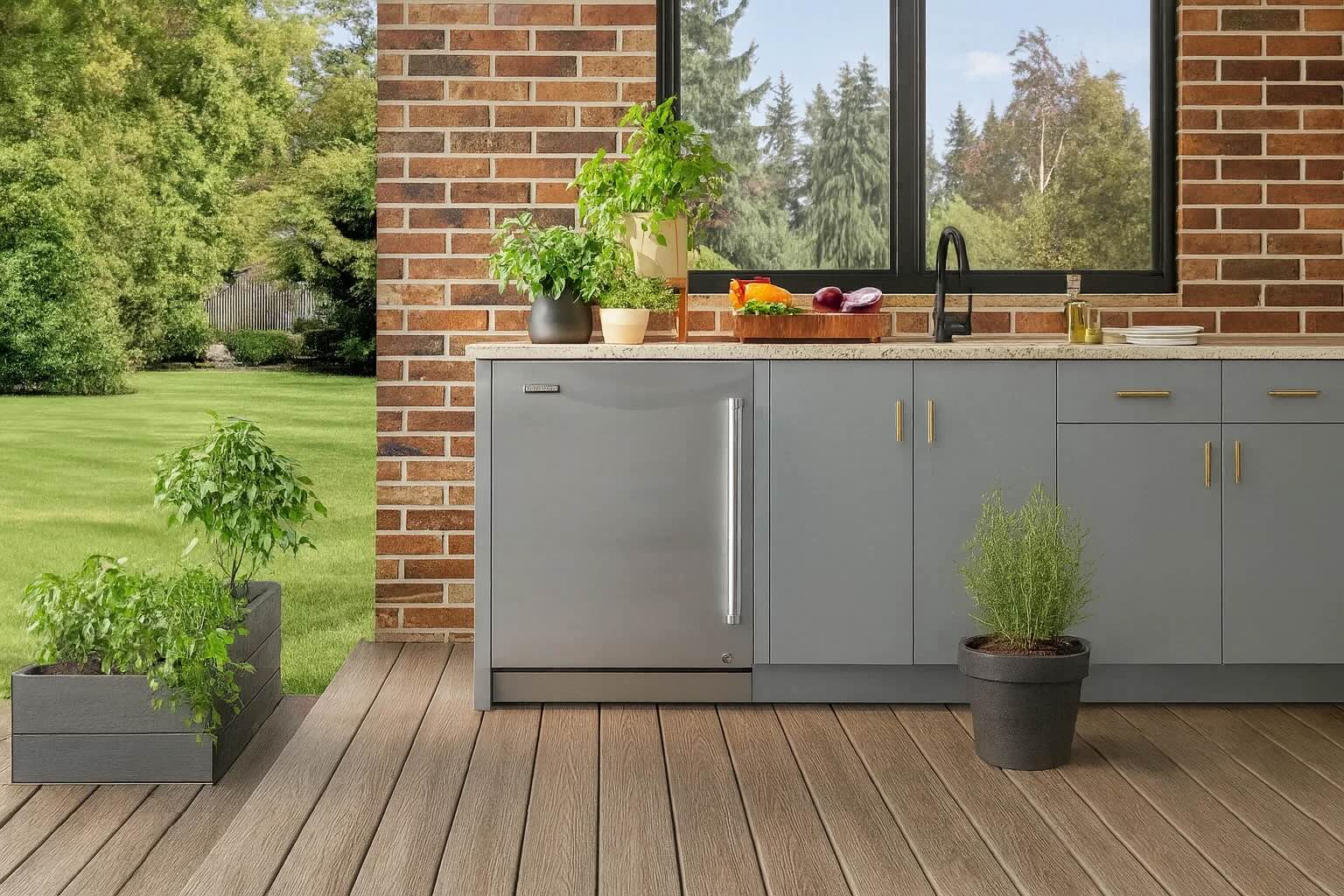
Sub-Zero’s outdoor-rated undercounter refrigerators — like the Sub-Zero DEU2450RO 24″ model, along with 15″ and 30″ variants in the Designer and Integrated lines — are engineered for patios, pool bars, and grill stations where indoor space isn’t an option.
These units boast powder-coated stainless steel exteriors, marine-grade gaskets, and sealed electronics that handle 0–110 °F swings without flinching. The Sub-Zero DEU2450RO, for instance, packs 5.4 cubic feet of flexible storage with adjustable glass shelves and a dedicated crisper drawer, all powered by a microprocessor that holds temps within 1 °F. They’re built to match Wolf grills aesthetically, with panel-ready fronts for seamless outdoor kitchens.
What sets them apart from indoor Sub-Zero siblings?
- Extra-thick insulation;
- UV-resistant finishes;
- GFCI plug compatibility to survive Georgia thunderstorms.
But even Sub-Zero can’t fully bulletproof against Mother Nature. In our Atlanta service bay, Sub-Zero outdoor refrigerator problems roll in steadily — often from installs that skimped on shade or drainage.
Georgia's Weather: The Silent Killer for Outdoor Sub-Zero Units
Atlanta’s climate is a perfect storm for these machines: 90%+ summer humidity breeds mold in seals, 100°F heat waves push compressors to their 15A limit, and spring pollen clogs every vent. We’ve seen a DEU2450RO on a Midtown deck go from pristine to pitted after one wet winter because the builder skipped the 1″ toe-kick clearance — trapping moisture like a sponge.
Humidity and Rain Fueling Outdoor Sub Zero Corrosion and Rust
High humidity doesn’t just fog the glass; it seeps into micro-cracks around hinges and drains, oxidizing the powder coat from the inside out. In Georgia, where it rains 50 inches a year, untreated aluminum trim turns orange-spotted in 18–24 months. A client in Brookhaven called us after a hailstorm — rain pooled under the unit, and by spring, the base had bubbled rust eating through the frame.
Heat and Cold Extremes Overloading Outdoor Sub Zero Extreme Temperature Tolerance
Sub-Zero rates these for 110°F ambient, but in Atlanta’s 105°F scorchers with direct sun, the interior climbs to 50°F even empty. Winter dips to 20°F aren’t the issue — it’s the rapid swings that stress seals and fans. One Inman Park install hit 115°F facade temps last July; the compressor short-cycled so much it burned the relay in a week.
These Sub-Zero outdoor environmental issues compound: pollen-dusted coils in spring cut efficiency 30%, turning minor heat strain into full Sub-Zero outdoor not cooling complaints by fall.
Faults That Hit Outdoor Sub-Zeros Hardest (and How We Tackle Them)
Outdoor exposure turns everyday glitches into showstoppers. Here’s what we fix most, straight from the field.

Seal Wear and Outdoor Refrigerator Seal Degradation
- Cause: UV rays and ozone from storms crack the rubber gaskets over 3–5 years, faster in unshaded spots.
- Signs: Frost on the door edge, warm spots in drawers, or water pooling inside after rain.
- DIY or Pro? Clean with mild soap monthly (DIY), but replace the gasket kit yourself only if handy — otherwise, pros ensure even compression.
- Time & Cost: 30–45 minutes, $250–$400 (parts $150, labor $100–$250).
- Repair vs. Replace: Always fix under 10 years; seals are cheap insurance against bigger corrosion.
Surface Rust and Sub Zero Outdoor Weathering
- Cause: Salt from pool splash or road de-icers mixes with rain, pitting the stainless accents.
- Signs: Orange streaks on handles or kickplate, flaking paint on the frame.
- DIY or Pro? Buff light spots with Bar Keepers Friend (DIY), but for deep pits, pros sandblast and re-seal.
- Time & Cost: Surface clean 20 minutes free; full repaint/seal 2 hours, $350–$550.
- Repair vs. Replace: Viable up to 12 years if caught early — untreated, it spreads to internals in 6 months.
Cooling Lapses from Sub Zero Outdoor Not Cooling
- Cause: Blocked vents from leaves/pollen or compressor overload in heat (DEU2450RO pulls max amps at 100°F+).
- Signs: Drinks at 55°F, fan humming non-stop, or error codes on the panel.
- DIY or Pro? Clear vents and reset via unplug (DIY), but fan/compressor diagnostics need tools.
- Time & Cost: Vent clean 15 takes minutes; relay swap 1 hour $400–$600; full compressor $1,200–$1,800.
- Repair vs. Replace: Fix relays/fans always; new compressor on 15+ year unit? Weigh against $4,000 replacement.
Compressor and Electrical Wear in the Elements
- Cause: Outdoor units like the DEU2450RO use sealed compressors, but Georgia’s power flickers (thunderstorms average 40/year) fry relays twice as often as indoors.
- Signs: Clicking start-up or no hum at all.
- DIY or Pro? Pro swap the capacitor ($450–$650, 60 minutes) — DIY risks voiding warranty.
When to Repair vs. When to Call Pros
Under 8 years with Sub-Zero’s 2-year full/5-year sealed warranty? Repair everything — costs 20–30% of new.
Post-12 years, if rust hits internals or cooling fails repeatedly, upgrade: a new DEU2450RO runs $4,000–$4,500 installed, but rebates shave $75 via Georgia Power. We’ve replaced three in one Alpharetta backyard last summer — cheaper than piecemeal fixes.
Outdoor Care That Beats Georgia's Worst
Our techs hand out this checklist on every install — it slashes repeat calls by 70%:
- Monthly: Hose down exterior (avoid high pressure on seals), wipe gaskets with silicone spray, clear drain trough.
- Quarterly: Vacuum coils through front grille, test GFCI outlet (flip and reset).
- Annually: Pro inspection for corrosion — $150 flat fee, catches 80% of issues early.
- Always: Install in shade with 1″ sides/top clearance; cover during long vacations.
Wrapping Up
Sub-Zero outdoor refrigerators turn backyards into extensions of your kitchen, but Georgia’s heat, rain, and pollen demand vigilance. Spot outdoor Sub-Zero rust or a warming drawer early, and a quick fix keeps it humming for 15+ years. Ignore it, and you’re looking at cascading Sub-Zero outdoor corrosion that no warranty covers.
FAQ
What causes outdoor sub zero rust fastest on Sub-Zero units?
Pool chlorine splash mixing with rain — pits stainless in 1–2 years. Monthly hose-downs and silicone on seals prevent 90% of it.
Can I fix Sub-Zero outdoor not cooling myself in Georgia heat?
Clear vents and reset power (DIY), but if it’s compressor strain from 100°F+ days, call pros — $400–$600 tune-up beats a $1,500 failure.
When should I replace vs. repair an outdoor Sub-Zero like the DEU2450RO?
Repair seals/rust under 10 years ($250–$550); replace if internals corrode post-12 ($4,000 new vs. endless patches). We quote on-site.
