

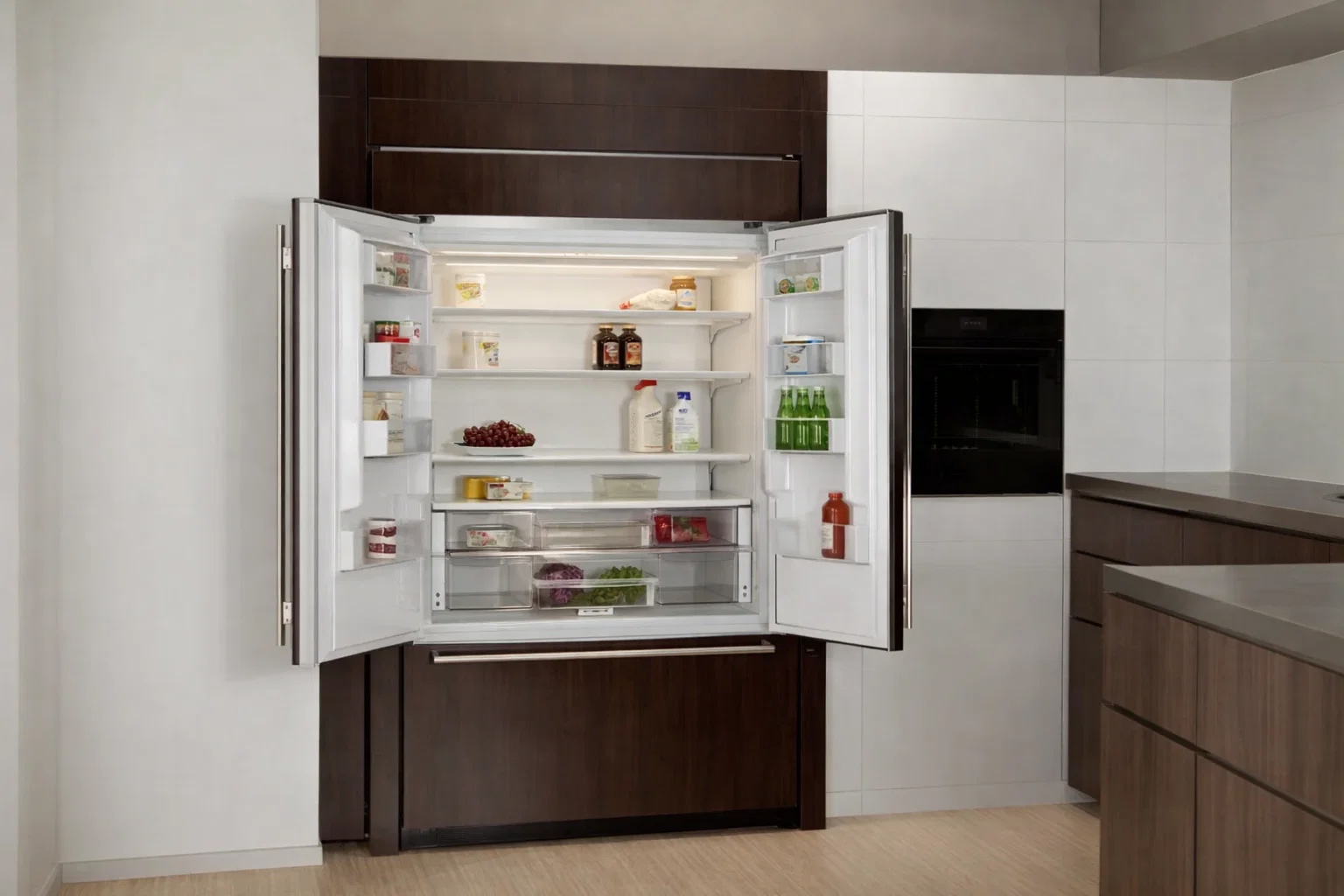
You open your Sub-Zero French-door fridge in the morning and the milk is warm. Again. There’s frost around the top door edges, the unit runs constantly, and your power bill is through the roof.
That’s our most common call on every French-door Sub-Zero in Atlanta and north Georgia. The french door seal problem — especially the upper gasket — is the #1 reason these fridges stop cooling properly and start building frost around doors.
In this post we’ll show you exactly why the top section gasket fails first on BI-36UFD, BI-42UFD, CL-3650UFD and CL-4250UFD models, how to spot it fast, and how to fix it before food spoils or the repair gets expensive.
Seeing warm fridge temps or ice on the top seal right now? Call or text us at (404) 341-6556 — we carry every Sub-Zero french door gasket and usually fix it the same day.
The Tell-Tale Signs Your French Door Isn’t Sealing Right
Here’s what our techs often spot when they diagnose clients’ Sub-Zero french door refrigerators:
- Warm fridge up top — milk and produce shelves 10–20 °F warmer than the freezer below, even though the freezer is still ice-cold.
- Thick french door frost around doors — that classic white “beard” of ice across the top section and frost around door edges.
- The compressor never shuts off — runs non-stop because french door not sealing properly lets humid Georgia air pour in.
- Top door seal degradation — the upper section seal feels hard, cracked, or sticky instead of soft and bouncy. Look for tears, warping, or yellowing right where your hand grabs.
- Dollar-bill test fails — close a dollar bill in the door; if you can pull it out without any tug, the door seal / gasket is shot.
- Condensation or water pooling inside the top of the fridge — warm air meeting cold surfaces.
Bottom line: in Georgia’s heat and humidity, the top section gasket takes the biggest beating and fails first on every Sub-Zero french door. Catch it early and you save food, money, and the compressor. Ignore it and the repair bill climbs fast.
BI-Series French Door Seal Issues: 36" and 42" models

The upper gasket is the number-one failure point on every BI-series we service.
- BI-36UFD and BI-36UFDID
Most calls come in for BI-36UFD not cooling in the top half and frost right across the center. The BI-36UFD door gasket hardens, develops hairline cracks, and the magnetic strip starts sagging. That’s why a BI-36UFD door seal fix is on almost every third ticket for 36-inch built-ins.
- BI-42UFD and BI-42UFDID
Same story, only faster. BI-42UFD top seal degradation shows up in as little as 4–5 years of daily use. The 42 inch french door gasket cracks across the top and sides, the magnet stops grabbing the frame, and you get BI-42UFD not cooling in the cheese/wine zone plus ice on the ceiling. The BI-42UFD door seal is the single most-replaced part on 42-inch units.
On every visit we see the same thing: cracked folds, rubber that feels like plastic, and magnetic strips that are warped or torn. Once the seal stops closing tight, the fridge breathes hot Georgia air all day long.
Classic Series French Door Problems: CL-3650 and CL-4250 models

The Classic series uses a slightly thinner gasket in the upper zone and places it closer to the dispenser and hinges, so it takes more abuse.
- CL3650UFD
CL3650UFD top door gasket issue is our top service call for this model. The CL3650UFD refrigerator door seal starts frosting over and sweating in 3–4 years, especially in homes with kids slamming doors. Result: CL3650UFD not cooling in the upper bins and ice buildup on drawer lids.
- CL4250UFD
CL4250UFD upper seal problems hit even harder because the gasket lives in constant moisture from the dispenser. The CL4250UFD top section seal warps, cracks, and loses its magnetic pull, forcing the unit to run non-stop.
Key difference on Classic models: thinner rubber and less margin for error up top. Georgia humidity plus dispenser moisture finishes these seals off in a couple of seasons.
How to Replace or Repair the Gasket Yourself and When to Stop
You can often fix a mildly deformed french door gasket in 30 minutes. Here’s what actually works:
- Do the dollar-bill test first. Close a bill in the door all the way around. If it slides out with zero resistance anywhere, the seal is gone.
- Warm the gasket with a hair dryer on low for 3–4 minutes while the doors are closed. This softens the rubber and lets the folds pop back into shape. Open and close the doors a few times afterward.
- Clean the channel under the old gasket with warm soapy water and a toothbrush. Old food and mold keep new seals from seating flat.
- If you’re doing a full french door gasket replacement:
- Pull the old gasket out (it just tucks into a channel, no screws on Sub-Zero).
- Start at the top corner and work your way around, pushing the new gasket’s barb firmly into the slot with a plastic putty knife or your fingers.
- Leave the doors closed for an hour so the new gasket takes the right shape.
When to quit and call us instead:
- The gasket is torn, cracked through, or the magnetic strip is shredded.
- You’ve warmed and cleaned it and the dollar bill still slides out like it’s greased.
60-Second Weekly Habits That Save the Seal and Your Electric Bill
Do these three things once a week and your gasket will last years longer:
- Wipe the seal with a drop of food-grade silicone spray or plain glycerin on a paper towel. Keeps the rubber soft and stops cracking in Georgia heat.
- Close the doors gently — no slamming. Every hard slam flattens the top section a little more.
- Quick level check: put a glass of water on the top shelf. If it tilts, adjust the front feet so the doors hang perfectly straight and the gasket presses evenly.
Takes one minute total and cuts most french door seal problems before they start.
The Bottom Line
95 % of the time a warm upper zone or frost on a French-door Sub-Zero is just the gasket. One visit, one new seal, problem gone for good. The same repair is available on site – read more about Sub-Zero repair in Druid Hills.
FAQ
My BI-36UFD has frost only across the top door edge and the rest looks fine. Is it definitely the gasket?
98 times out of 100, yes. That’s the classic BI-36UFD door gasket failing first in the upper section. We see it weekly.
Can I replace the CL4250UFD top section seal myself, or should I just call you?
You can if it’s only stiff. But if the CL4250UFD top section seal is cracked or the magnet is dead, you’ll fight it for an hour and still leak air. Most folks call us after the first try.
I just replaced the gasket on my CL3650UFD and the top is still a few degrees warm. What now?
Two usual culprits: the new gasket wasn’t seated all the way around (common at the top corners) or the doors are slightly out of level. We fix both in the same visit.
How often should I replace the french door gasket on a Sub-Zero in Georgia?
With our humidity and heat, plan on 6–9 years for BI-series and 5–7 years for Classic models if you baby them. Skip the weekly wipe-down and you’ll be doing it sooner.
