

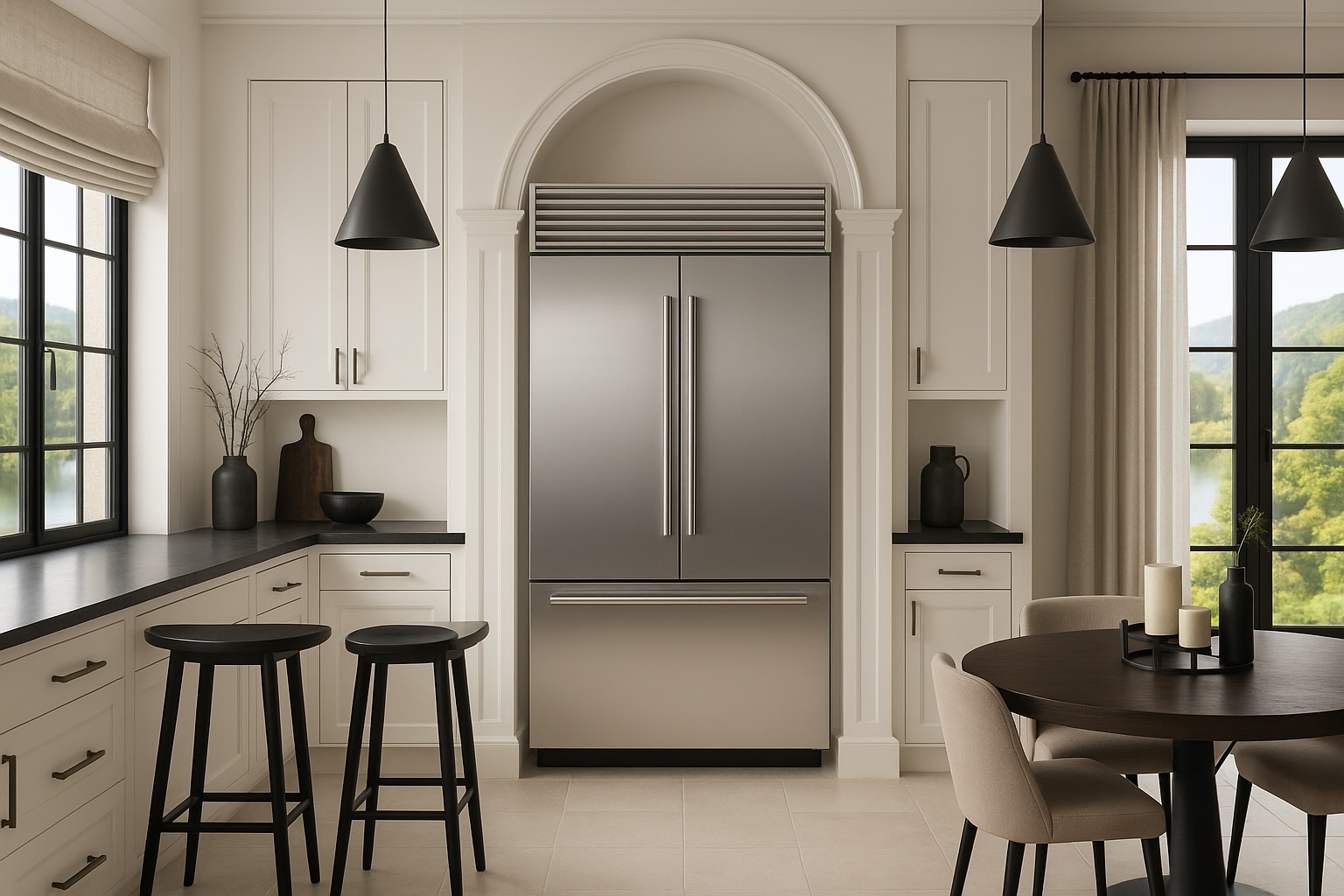
Sub-Zero refrigerators last 20+ years on average because every component is overbuilt and designed for precise food preservation. The biggest difference from mainstream brands is the dual refrigeration system, which we covered in detail in our separate article.
Here’s the real-world breakdown of the components that matter most, what they do, how Sub-Zero makes them better, and what it costs when they eventually need service.
Dual Compressor System
What it does
Sub zero compressor is the pump that moves refrigerant through the system. Most brands use one compressor and a valve to split duty between fridge and freezer. Sub-Zero uses two dedicated compressors (one for fridge, one for freezer) in almost every full-size model.
Sub-Zero difference
- No temperature or humidity compromise – refrigerator stays ~37 °F with high humidity, freezer stays 0 °F with low humidity.
- Virtually silent variable-speed or digitally controlled compressors in current models.
- Compressors run fewer cycles → longer life and lower energy use.
Replacement reality (2025 prices)
Cost to replace a Sub-Zero compressor is between $1,200–$2,200 for labor + sealed-system work in most markets. Sub-Zero often covers the compressor part itself under the 12-year sealed-system warranty if the unit is registered, so you only pay labor and refrigerant. Still worth it on a $12k–$18k machine that’s 10–12 years old.
Condenser Coils
What they do
Hot refrigerant gas gives up heat here and turns back into liquid. A fan pulls air across the coils to cool them.
Sub-Zero difference
Coils are mounted on top or behind a flip-up grille (not underneath like most brands), so dust doesn’t get kicked up every time the floor is cleaned. Current models have a condenser filter that pops out for easy cleaning and a “clean condenser” reminder light.
Maintenance
Vacuum or brush every 6 months. Neglect this and the compressor works harder, runs hotter, and dies early. Takes 10 minutes and adds years to the machine.

Evaporator Coils & Fans
What they do
Cold liquid refrigerant absorbs heat inside the cabinet here and boils into gas. Evaporator fans push that cold air around.
Sub-Zero difference
Separate evaporator for fridge and freezer (again, part of dual refrigeration). Multiple low-velocity fans instead of one big loud fan → even temperatures corner-to-corner (±1 °F). Nano-coated or spill-proof glass shelves in newer models prevent drips from hitting the evaporator and icing up.
Replacement cost
Sub zero evaporator coil replacement cost usually falls between $1,800 – $3,200 because it’s a sealed-system repair (evacuate, braze new coil, pressure test, recharge). Rare before 18–20 years unless there’s a leak.
Door Gaskets (Magnetic Seals)
What they do
Keep cold air in and warm air out.
Sub-Zero difference
Strong multi-lip magnetic gaskets that literally snap the door shut. Newer Classic and PRO models have a coating that resists mold and staining. Doors self-align when you push them almost closed. If any of the steps above stall out, our Sub-Zero refrigerator repair page explains what a technician checks first.
Lifespan & cost
Good gaskets last 15–20 years. The replacement set is $250–$400 per door + labor (~$200–$300). Cheap insurance compared to the energy waste of a bad seal.
Water Filtration System
What it does
Filters water for the ice maker and (on some models) internal dispenser.

Sub-Zero difference
Every ice-making model has a dedicated microbiological water filter that removes 99.99 % of contaminants and is rated for a full year or 700–1,000 gallons in most cases. Filter is behind the grille, takes 30 seconds to change. Newer models show exact filter life percentage on the touchscreen.
Cost
Genuine filter ~$80–$110 each. Use third-party only if you want cloudy ice and possible ice-maker damage.
Defrost System
What it does
Removes frost and ice that naturally build up on the evaporator coil during normal operation.
Sub-Zero difference
Sub-Zero uses true adaptive defrost. The microprocessor and multiple sensors monitor actual frost accumulation and only initiate a defrost cycle when it’s genuinely needed — often just 2– 4 times per week instead of the 2 – 4 times per day you see on timer-based refrigerators.
Cost to repair
Defrost heater, sensor, or control-board issues are the usual culprits when frost takes over. Typical repair cost: $450–$750 parts + labor (heater itself is inexpensive; most of the bill is accessing the evaporator in a sealed, foamed-in cabinet). Still rare before 15–20 years on a Sub-Zero.
Thermostats & Controls
What they do
Monitor and adjust temperature.
Sub-Zero difference
Microprocessor controls with air sensors (not coil sensors like cheap fridges) for true cabinet temperature accuracy. Current models have touchscreen interfaces, Wi-Fi, and even an app that tells you if the door was left ajar. Temperature alarm sounds after only a few minutes instead of hours.
Bonus Feature Almost Everyone Misses: NASA-Inspired Air Scrubber
Every Sub-Zero made since ~2004 has an ethylene/odor scrubber cartridge that changes the air completely every 20 minutes. It’s why a Sub-Zero almost never smells like old food even when packed. Cartridge costs ~$60 and lasts 12 months.
Every major component in a Sub-Zero is deliberately over-engineered compared to mass-market refrigerators. That’s why repair costs look scary in isolation but make perfect sense when the machine is still running perfectly at 25 years while everything else has gone to the landfill twice.
Is it still worth repairing a 15-year-old Sub-Zero?
Yes, almost always. A $2,000–$3,000 sealed-system repair on a unit that originally cost $14k–$18k and still has 10–15 good years left is cheaper than buying a new comparable refrigerator today.
Why is my electric bill lower than with my old KitchenAid even though Sub-Zero is bigger?
Dual compressors + adaptive defrost + better insulation = fewer run hours. Most current 48″ built-ins use ~500–650 kWh/year despite massive interior volume.
Can I use generic water filters to save money?
You can, but you’ll get cloudy ice, slower production, and a real risk of ice-maker valve failure. The genuine filter is the cheapest insurance you’ll ever buy.
How often do Sub-Zero compressors actually fail?
In registered units under the 12-year warranty, factory data shows failure rate under 2 %. Most compressors die between years 18–25 from neglect (dirty coils) rather than defect.
What’s the very first thing I should do when I buy a used Sub-Zero?
Clean the condenser coils, change the air-purification cartridge, and replace the water filter. Ten minutes of work and $150 in parts can add a decade to its life. If you would rather not open the unit yourself, see our coverage in Dunwoody for service details and response times.
