
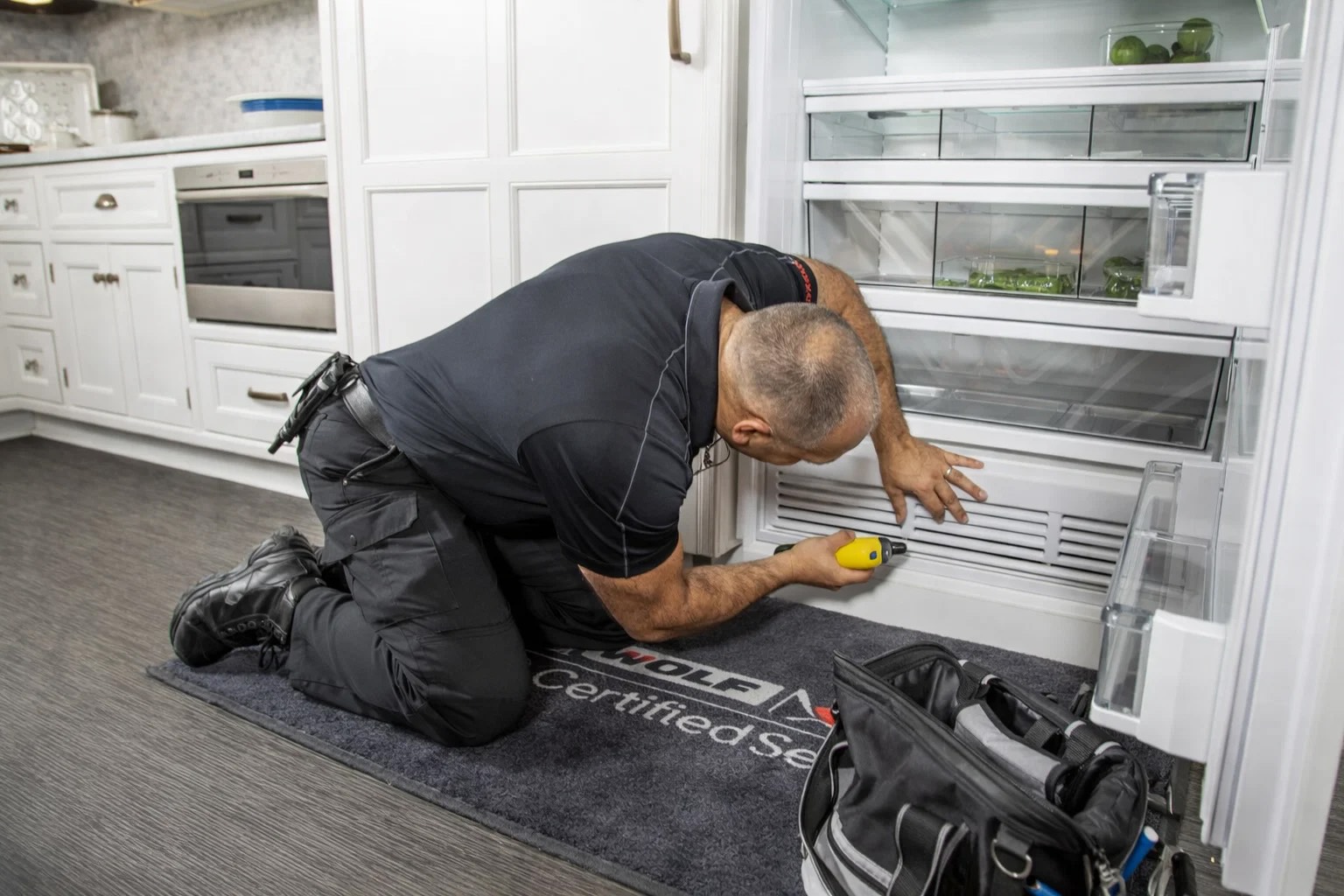
We believe owners should be able to take care of the basic upkeep of their Sub-Zero appliances without calling for service every time something small comes up. Some work will always require an experienced technician, but many routine tasks, like cleaning condenser coils, replacing water filters, clearing drains, inspecting gaskets are manageable for many people.
Before scheduling a service visit, it often makes sense to check whether the issue is related to regular maintenance. Taking care of those items yourself can save time, avoid unnecessary appointments, and help your appliance continue to perform the way it should.
Our article examines DIY maintenance tasks that Sub-Zero owners can reasonably perform themselves. Not as a substitute for professional service, but as the foundation that keeps service necessary only when it should be. If the problem turns out to be deeper than a filter or a door seal, we handle it in person – see our coverage in Vinings.
Maintenance Is Part of the Operating Model
Sub-Zero refrigeration systems rely on stable airflow, controlled moisture, and clean heat exchange. When those conditions are met, the appliance operates predictably. When they are compromised, the system compensates quietly, often for years, before failure becomes visible.
From a repair perspective, preventive maintenance is not an enhancement. It is built into how the appliance is expected to be used. Owners who follow basic maintenance schedules typically experience fewer temperature complaints, fewer ice-maker issues, and longer compressor life.
Pro tip: Most early Sub-Zero problems are maintenance-related, not mechanical. Addressing airflow, filtration, and seals early prevents long-term system strain.
Condenser Cleaning and Thermal Stability
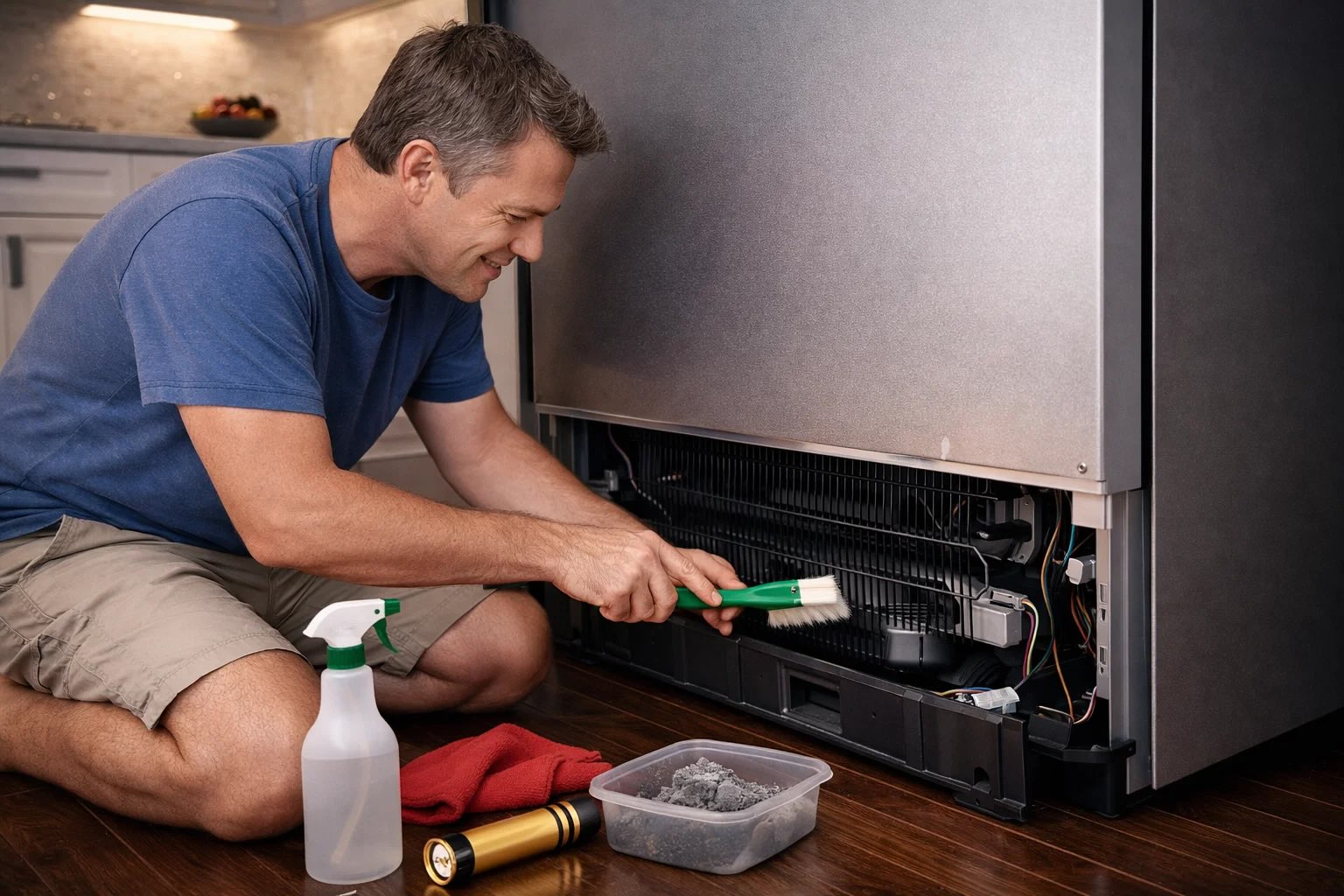
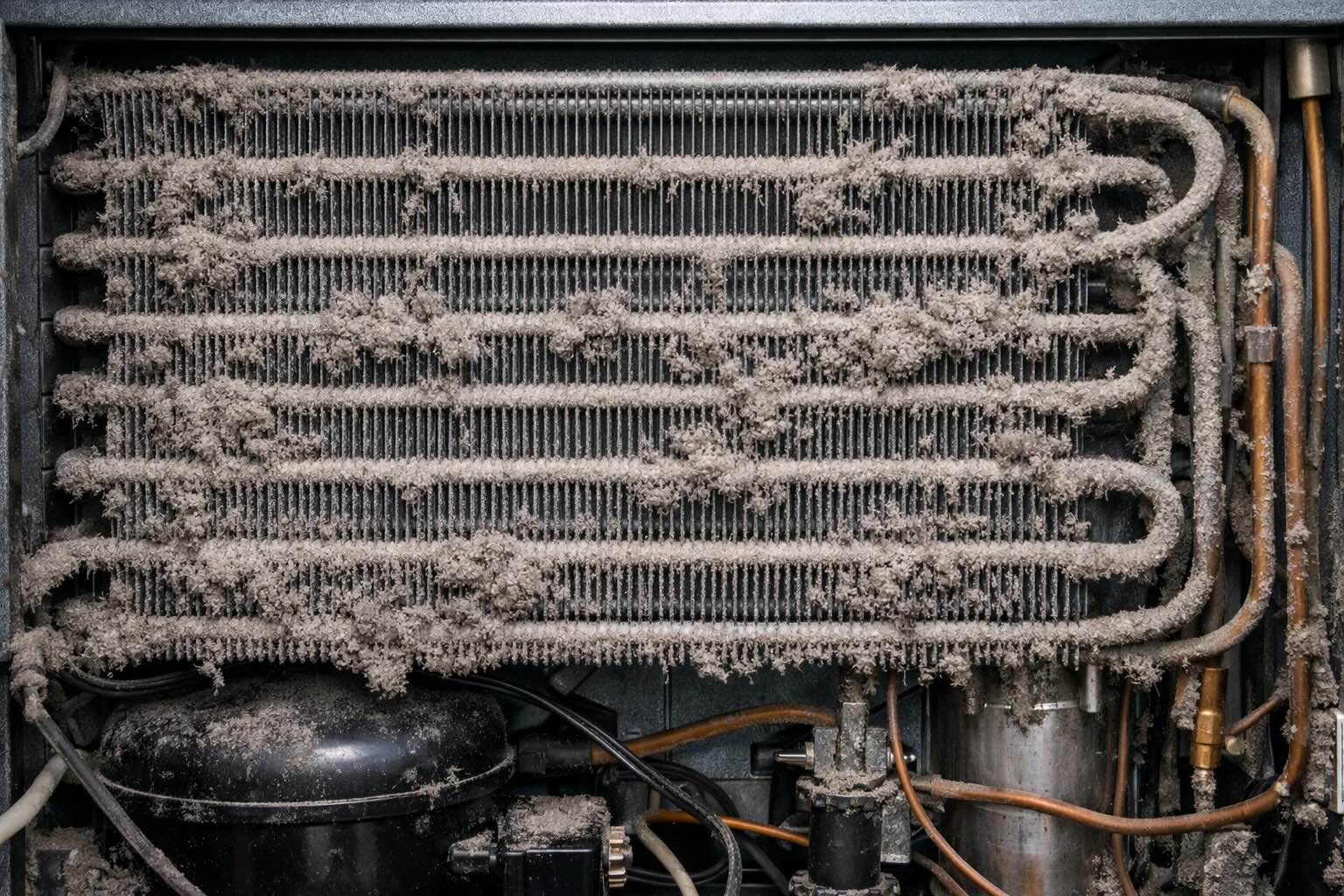
Among service technicians, condenser cleaning is regarded as the most important owner-level maintenance task. Dust, grease, and pet hair reduce heat dissipation, forcing longer run cycles and higher operating temperatures.
The problem is not sudden failure, but gradual strain. Compressors and fans compensate until wear becomes irreversible.
Routine cleaning condenser coils keeps the refrigeration system within its intended thermal range and prevents problems that no software update or reset can correct.
Pro Tip:
Homes with pets should treat condenser cleaning as quarterly maintenance. Pet hair accelerates heat retention more than dust alone.
Water Filter Replacement and System Balance
Water filtration in Sub-Zero refrigerators affects more than taste. Flow restriction from overdue filters places stress on valves and ice-making components, often showing up later as inconsistent ice production or slow fill issues.
From a repair standpoint, delayed water filter replacement is one of the most common contributing factors to avoidable service calls. Replacing filters on schedule keeps pressure and flow within design limits.
This is routine maintenance, not a convenience feature.

Pro Tip:
Ice-maker problems often appear before any noticeable change in drinking water quality.
Air Purification Filters and Food Preservation Performance

Sub-Zero’s air purification system operates continuously and without noise, which is why it is frequently ignored. When the filter expires, the system does not fail—it simply stops working effectively.
Regular air purification filter replacement supports food longevity and internal hygiene. In service diagnostics, expired air filters rarely appear alone; they usually coincide with odor complaints and interior moisture imbalance.
Drain Maintenance and Interior Water Issues

Interior water accumulation is one of the clearest examples of preventable problems. In most cases, it results from obstructed drains rather than failed components.
Basic drain maintenance, including periodically clearing drains yourself, prevents water from backing up into refrigerator or freezer compartments. When neglected, minor drainage issues often escalate into ice buildup, drawer interference, or unnecessary service visits.
Pro Tip:
If drainage problems return after basic cleaning, the issue is no longer maintenance-related and requires professional diagnostics.

Door gaskets operate continuously and degrade gradually. A compromised seal allows moisture intrusion, increases frost formation, and destabilizes internal temperatures.
Regular inspecting gaskets, along with simple cleaning, preserves sealing performance and reduces strain on the cooling system. Gasket neglect is rarely dramatic, but it is consistently expensive over time.
Interior Care Without Overcorrection

Knowing how to clean fridge interior surfaces correctly is less about technique and more about restraint. Mild cleaners and regular attention prevent residue buildup without damaging finishes or materials. If the built-in units above your range are acting up too, we also handle Wolf hood and microwave service.
Aggressive products and abrasives cause more long-term damage than infrequent cleaning ever would.
Frost Accumulation and Manual Defrosting

Sub-Zero freezers are designed to minimize frost. When excessive frost appears, it usually signals airflow restriction or seal issues rather than a defrost system failure.
Occasional defrosting freezer compartments restores airflow and drawer function when needed. It should be done slowly and without force, as internal panels and evaporators are not designed for mechanical ice removal.
What Owners Are Expected to Handle
In professional repair contexts, the following are considered refrigerator maintenance you can do without technician involvement:
- Cleaning condenser coils
- Replacing water filters
- Air purification filter replacement
- Clearing drains yourself
- Inspecting gaskets
- Interior cleaning
- Monitoring frost buildup
Electrical diagnostics, sealed-system work, refrigerant handling, and control board issues remain outside owner scope.
What Not to Ignore
Some Sub-Zero issues are easy to dismiss because the refrigerator still runs. From a service perspective, these are early warning signs:
- The unit runs longer than it used to, even in mild weather
- One section cools differently than another
- Ice production slows or becomes inconsistent
- Frost appears where it normally hasn’t
- Water shows up under drawers or on shelves
These signs rarely correct themselves. When maintenance doesn’t change them, professional diagnostics are usually the next step.
Maintenance as Problem Prevention
Sub-Zero refrigerators are not low-maintenance appliances. They are maintenance-dependent appliances. When routine care is consistent, failures tend to be isolated and predictable. When it is ignored, even robust systems deteriorate quickly.
Understanding that distinction is part of owning a luxury appliance.
Bottom Line
Most Sub-Zero issues don’t start as breakdowns. They start as small changes: longer run times, uneven cooling, ice that isn’t quite right. Routine maintenance can often correct those problems. When it doesn’t, guessing or repeated DIY attempts usually make things worse. That’s when it makes sense to call Sub-Zero Appliance Repair and have the unit checked properly before the problem grows.
FAQ
How often should I perform Sub-Zero maintenance?
Most routine maintenance tasks should be reviewed every 3–6 months. Filters follow manufacturer schedules, while condenser cleaning may be needed more often in homes with pets.
Can DIY maintenance replace professional service?
No. DIY maintenance supports system health but does not replace professional diagnostics or repairs. It reduces the likelihood of preventable failures.
Is condenser cleaning really that important?
Yes. In repair data, dirty condensers are one of the most common contributors to overheating, efficiency loss, and premature compressor wear.
What happens if I delay water filter replacement?
Delayed replacing water filters can restrict flow, affect ice production, and stress internal valves—often leading to service calls that could have been avoided.
When should I call a professional?
If you notice temperature instability, persistent error codes, abnormal noise, or repeated frost buildup after maintenance, professional service is required.
