

Sub-Zero refrigerators are engineered for long-term performance, but even premium refrigeration systems eventually require service. When temperatures rise, ice production becomes inconsistent, or the unit begins cycling differently, the first question we hear in our Atlanta service calls is simple: what does warranty cover, and will it apply to this repair?
Sub-Zero warranty coverage is strong, but it is not a single blanket policy. Coverage changes over time and depends on whether the failure involves the sealed system warranty components or standard parts such as fans, sensors, electronics, and accessories. In our Sub-Zero appliance repair service, we verify the warranty tier and classify the failure first, because that step determines whether the claim is fully covered, partially covered, or excluded.
In this article, we provide clear warranty information and practical appliance warranty details:
- how long is warranty coverage,
- warranty what is included,
- warranty what is not covered,
- parts labor coverage differences across time periods,
- checking warranty status for your unit,
- and the Sub-Zero warranty claim process.
Start Here: How We Confirm Warranty Coverage
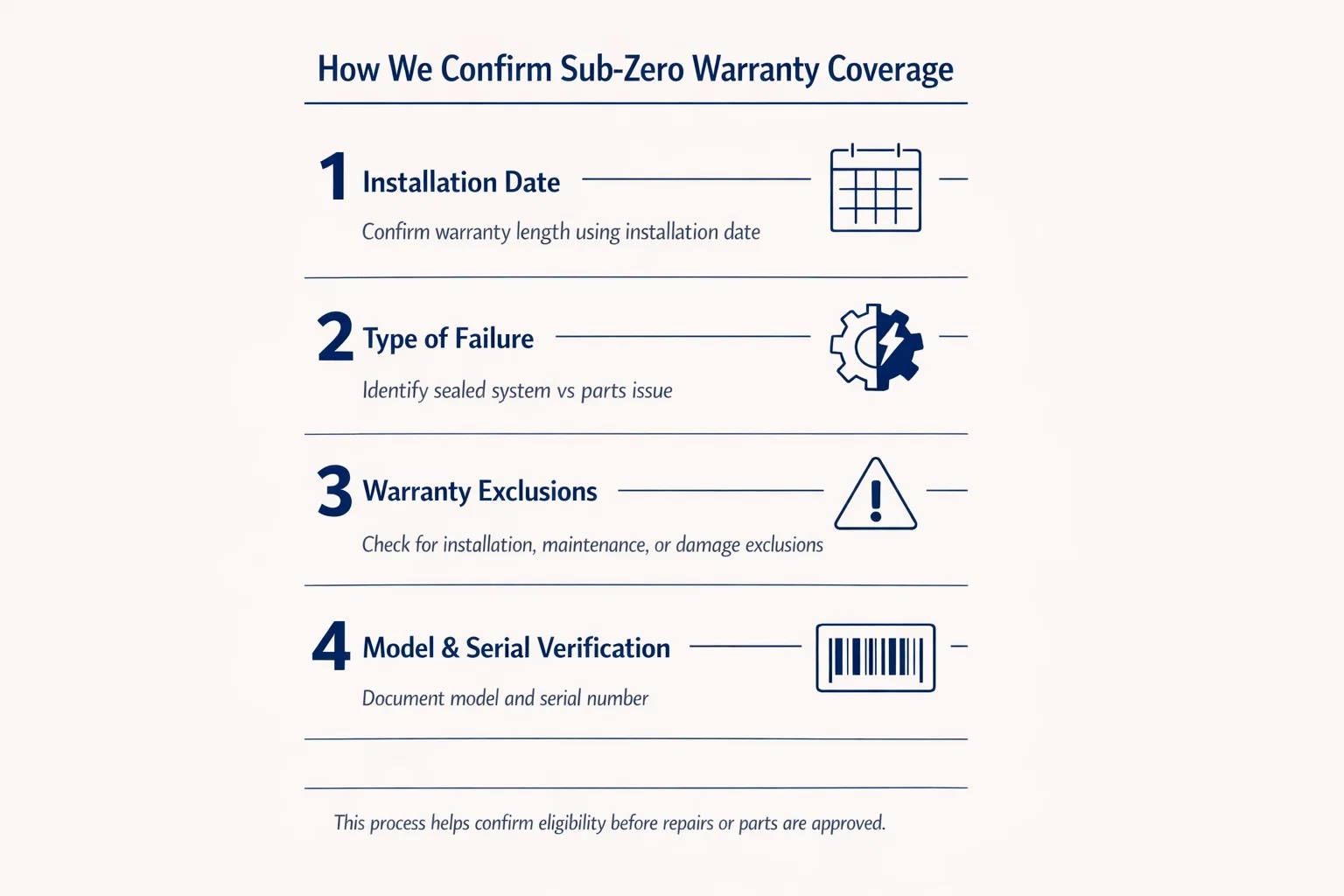
When a Sub-Zero unit is not cooling properly or a key component fails, we follow a structured approach that prevents delays and reduces the risk of warranty denial.
- Confirm the warranty length for refrigerator by checking installation date
- Identify whether the issue is sealed system vs parts
- Check for common exclusions such as installation errors, maintenance neglect, or external damage
- Document model and serial number for checking warranty status for the unit
This approach allows us to confirm eligibility before a repair is approved or parts are ordered.
Warranty Information: How Long Is Warranty Coverage on Sub-Zero?
Homeowners searching for Sub-Zero refrigerator warranty details usually want a simple answer to how long is warranty coverage. Sub-Zero warranty coverage is typically structured into three tiers:
- 2 year warranty: full coverage, typically including parts and labor for defect-based failures
- 5 year sealed system warranty: sealed system coverage including parts and labor
- 12 year warranty: limited sealed system coverage, typically sealed system parts only
This 2/5/12 structure is the standard warranty length for refrigerator coverage most owners reference when reviewing Sub-Zero documentation.
What Does Warranty Cover

When owners ask what does warranty cover, the correct answer depends on time and component type. Sub-Zero warranty coverage details are easiest to understand when viewed by warranty tier.
2 Year Warranty: Parts Labor Coverage for Most Components
The first two years from the original installation date are typically the most comprehensive. During this period, Sub-Zero warranty coverage generally includes parts labor coverage for defect-based failures across most functional components.
The 2 year warranty period often covers:
- electronic control boards and modules (defect-related)
- temperature sensors and thermostats
- condenser and evaporator fan motors (when defect-related)
- wiring, switches, and connectors installed by the manufacturer
- some ice maker component failures when defect-based
- mechanical component defects under normal residential use
This is the period when the warranty most closely resembles full-service coverage.
5 Year Sealed System Warranty: Cooling System Protection
The 5 year sealed system warranty is designed to cover the highest-cost refrigeration repairs. It typically includes parts and labor for sealed system defects.
Sealed system warranty components generally include:
- compressor
- condenser
- evaporator
- filter drier
- sealed refrigerant tubing and heat exchange components
Because sealed system repairs require specialized labor, this tier is one of the most valuable components of Sub-Zero warranty coverage.
12 Year Warranty: Limited Sealed System Parts Coverage
The 12 year warranty is often misunderstood. In most cases, it is limited coverage that supplies sealed system parts for defect-based failures but does not include labor or service costs.
In practical terms, during the 12 year warranty period:
- sealed system parts may be provided under warranty
- diagnostic charges, labor, and refrigerant-related service may still be billed
This is why owners are sometimes surprised to receive an invoice even though the unit remains under warranty.
Sealed System Warranty vs Parts: The Coverage Difference That Matters
The biggest misunderstanding in Sub-Zero warranty coverage is assuming that “not cooling” always means a sealed system failure. Many cooling symptoms are caused by parts that are not sealed system components.
Sealed system (covered under sealed system warranty tiers)
- compressor
- evaporator
- condenser
- filter drier
- sealed refrigerant tubing and heat exchange components
Standard parts (not sealed system)
- condenser fan motor
- evaporator fan motor
- control boards and electronics
- sensors and switches
- lighting assemblies
- ice maker systems and dispenser components
- drawers, bins, shelves, and accessories
A refrigerator can stop cooling because the compressor failed (sealed system), or because airflow stopped due to a fan motor failure (standard parts). Symptoms appear similar, but warranty coverage differs.
Will Sub-Zero Warranty Cover This Repair?
In our Atlanta service practice, most owners want a fast way to determine whether warranty applies before scheduling service. These scenarios reflect what we most often see in the field. Our technicians work on the whole Sub-Zero Group family in one visit, Cove dishwasher repair included.
More likely covered (defect-based)
These failures are more likely to qualify under Sub-Zero warranty coverage when they occur within the correct tier and are not tied to exclusions:
- compressor not operating (sealed system)
- sealed system refrigerant leak due to a manufacturing defect
- evaporator or condenser failure caused by defect
- control board failure during the 2 year warranty period
- sensor or thermostat failure during the 2 year warranty period
These represent typical examples of when eligibility requirements are met.
Often not covered
These situations frequently fall under exclusions because they are linked to installation conditions, maintenance neglect, or external events:
- poor cooling due to dirty condenser coils
- airflow restriction due to blocked vents or dust buildup
- water leaks traced to improper water line installation
- door seal issues caused by the unit not being level
- electrical failure caused by power surge damage
- corrosion caused by environmental exposure or harsh cleaners
- flood damage, pest damage, or physical impact
These are common examples of the situation when the unit is still within a warranty period.
Warranty What Is Not Covered: Common Exclusions
Warranty coverage is defect-based, not a blanket service contract. These exclusions appear most frequently in denied claims:
- Installation errors: ventilation restrictions, improper electrical supply, incorrect water line installation, leveling issues
- Maintenance neglect: dirty condenser coils, restricted airflow, long-term seal failure leading to frost or moisture issues
- Cosmetic wear and consumables: dents, scratches, filters, bulbs, normal wear
- External damage: surge damage, flooding, fire, pest damage, corrosion
- Unauthorized repairs: service performed outside approved channels or using non-approved parts
Understanding these exclusions is essential to avoid unnecessary claim disputes.
Registering Warranty: What We Advise in Atlanta Service Calls
Registering warranty is a practical step that reduces delays and simplifies coverage verification. While warranty coverage is tied to the installation date and unit identification, registration can help prevent documentation conflicts later.
To reduce friction during service:
- register soon after installation
- keep proof of purchase and installation records
- store model and serial information securely
Checking Warranty Status For Your Sub-Zero Refrigerator
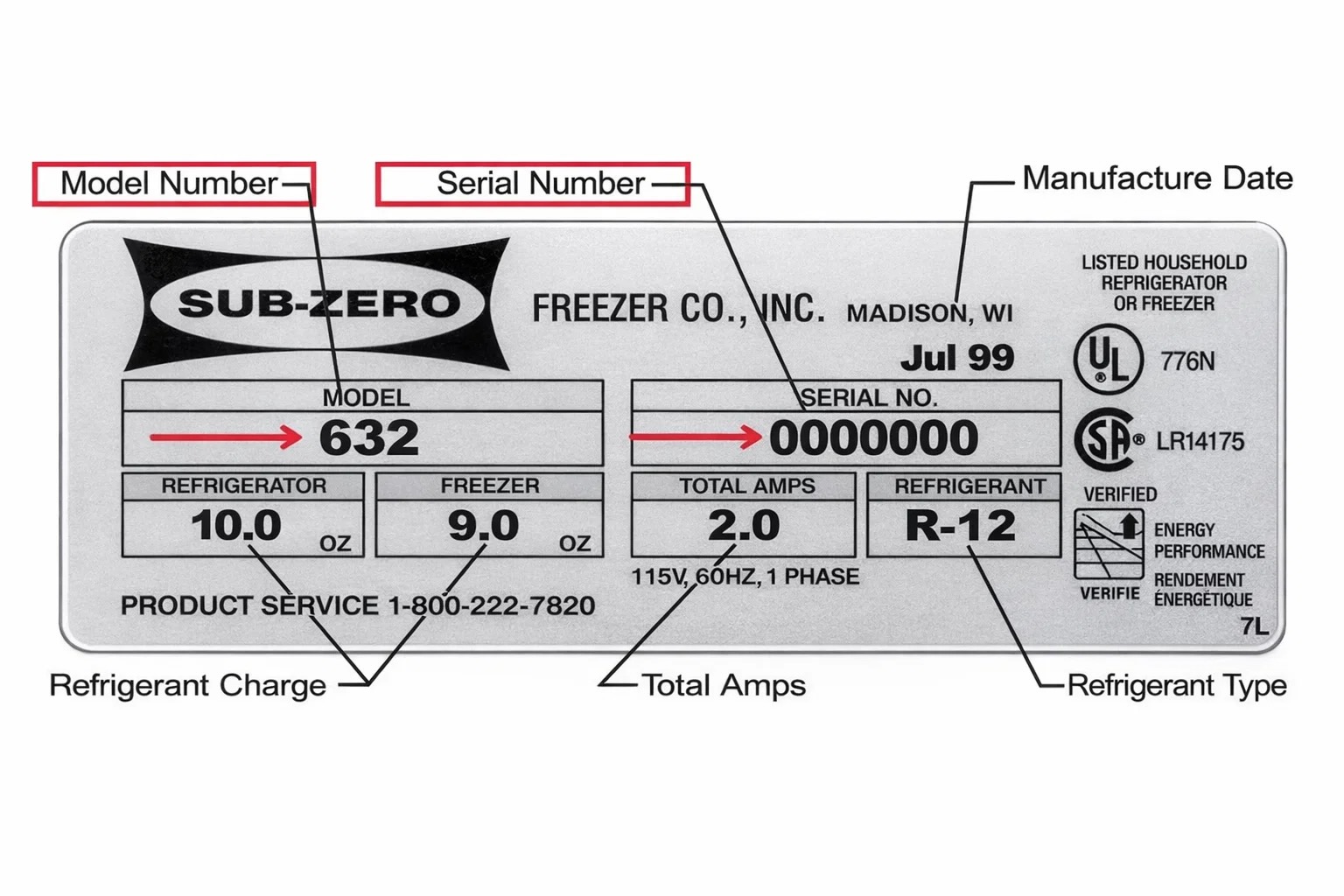
Before scheduling service, checking warranty status for your unit is one of the most effective ways to avoid unnecessary costs. To confirm coverage, we typically verify:
- model number
- serial number
- original installation date (or documentation confirming it)
Model and serial information is normally found on the unit identification label inside the refrigerator compartment (exact placement varies by model).
Warranty Claim Process: How It Works
A successful Sub-Zero warranty claim process usually follows a consistent workflow:
- confirm model and serial number
- confirm installation date and warranty tier
- classify the issue as sealed system vs parts
- complete diagnosis and document findings
- proceed with repair approval under the appropriate warranty tier
Most claim delays occur when the failure is assumed to be sealed-system-related, but diagnosis shows a non-sealed system failure or an excluded condition such as maintenance neglect.
Why You May Still Pay Under Warranty
Even when a unit remains within a warranty period, charges can still apply under certain conditions. This is especially common during the 12 year warranty period because coverage is usually limited to parts.
You may still pay if:
- labor is not covered under that tier
- diagnostics and service calls are billed separately
- refrigerant evacuation and recharge are required
- the failure falls under exclusions such as installation or maintenance issues
- the cause is external damage (surge, water, corrosion, pests)
This is a key part of Sub-Zero warranty coverage details that owners often learn only after the repair begins.
Extended Warranty Options: When Additional Coverage Has Value
Many owners consider extended warranty options because coverage becomes more limited after year two. In our experience, extended coverage is most valuable when it includes labor and non-sealed system components.
Extended warranty options tend to provide the most real-world value when they cover:
- labor beyond year five
- electronics and control systems
- fan motors and sensors
- service call fees and diagnostics
- non-sealed system repairs beyond year two
Plans that cover parts only while excluding labor can provide limited benefit because labor often exceeds parts cost in premium refrigeration service. Homeowners who would rather hand it to a technician can start with Sandy Springs Sub-Zero service.
Bottom Line
Sub-Zero warranty coverage is among the strongest in premium refrigeration, but it is not uniform across twelve years.
- The 2 year warranty generally provides broad parts labor coverage for defect-based failures.
- The 5 year sealed system warranty covers sealed refrigeration components with parts and labor.
- The 12 year warranty typically covers sealed system parts but may not include labor or service charges.
If you want predictable outcomes, accurate diagnosis to confirm sealed system vs parts should come before any warranty claim is filed.
FAQ
How long is warranty coverage on a Sub-Zero refrigerator?
The standard warranty length for refrigerator coverage typically follows a 2 year warranty, a 5 year sealed system warranty, and a limited 12 year warranty for sealed system parts.
What does warranty cover during the 2 year warranty period?
During the 2 year warranty, Sub-Zero warranty coverage generally includes defect-based repairs for most functional components with parts labor coverage included.
What is included in the sealed system warranty?
The sealed system warranty generally covers the compressor, evaporator, condenser, filter drier, and the sealed refrigerant circuit tubing and heat exchange components.
Are fan motors included in sealed system warranty coverage?
No. Fan motors and most electrical parts are not sealed system components. They may be covered during the 2 year warranty if the failure is defect-based.
What is the most common reason a Sub-Zero warranty claim is denied?
The most common reasons include maintenance neglect (dirty condenser coils), installation problems (restricted ventilation), external damage (surges or water), or unauthorized service.
How do we recommend checking warranty status for a Sub-Zero?
For checking warranty status for your unit, we recommend verifying model number, serial number, and installation date before starting the warranty claim process.
Are extended warranty options worth it for Sub-Zero refrigerators?
Extended warranty options can be worthwhile when they include labor and cover non-sealed system parts such as fan motors and electronics beyond year two.
